I've shared a lot of stories over the years about the signs I've received from my loved ones on the other side, as well as experiences that I believe have involved my spirit guides. Some of these experiences have been so specific and extraordinary that they've left me with very little doubt about what I believe.
But what if you don't receive signs?
What if you ask, wait, watch, and hope for something—anything—that might reassure you that your loved one is still with you, and nothing seems to happen?
I recently heard from someone who has been inspired by my writings but shared that they've desperately wanted a sign from their grandmother and haven't experienced one. It made me realize that while I've written extensively about the connections I've experienced, I haven't talked much about the times when I wanted a sign and didn't receive one.
Because I've certainly had those moments, too.
After my mother died, there were times when I wanted so badly to know she was still with me. I wanted reassurance. I wanted comfort. I wanted to know that the relationship we shared hadn't simply ended when her physical body died.
And interestingly, it seemed that the harder I tried to make something happen, the less likely I was to experience anything.
Why is that?
I don't know that I fully understand it, but through years of reading, studying, listening to podcasts, and exploring different spiritual traditions, I've developed some beliefs about how we might connect with those who have passed.
Energy, Frequencies, and Our Human Minds
One of the things I've come to believe is that we are more than our physical bodies. We are also energy, and I believe that energy continues after our physical bodies die.
In many of the spiritual teachings I've explored, there is an understanding that spirit exists at a different energetic frequency than we do here in our human experience. Some believe that for communication to occur, there has to be a kind of energetic meeting between the two.
I can't tell you exactly how that works, and I certainly can't prove it. But it has helped me make sense of some of my experiences.
Think about the energy you feel around different people.
There are people whose presence feels light, joyful, and uplifting. You walk away feeling energized. And then there are those lovely Eeyore types—you know the ones I'm talking about—where you sometimes walk away feeling a little heavier or exhausted.
We all experience emotional energy differently, and our own internal states can influence how we perceive the world around us.
One of the things I've learned through my spiritual studies is that experiences people interpret as spirit communication often seem to happen when they're relaxed, sleeping, meditating, or simply going about their day without expecting anything.
For me, that has certainly been true.
When I'm trying really hard to receive a sign, I'm usually in my head. I'm thinking, anticipating, analyzing, and sometimes even questioning whether something counts.
But when I'm relaxed and not particularly looking for anything, something unexpected may happen that catches my attention.
Now, I want to be careful here. I don't believe that being sad, anxious, angry, or deeply grieving means you're somehow vibrating too low to connect with your loved ones. Grief is a natural human experience, and there is nothing spiritually wrong with having difficult emotions.
I simply wonder whether our constant thinking and searching sometimes make it harder to notice the quieter experiences happening around us.
And from my perspective as a therapist trained in IADC (Induced After-Death Communication), an EMDR-based approach to grief, I've come to appreciate how our emotional state may influence our ability to experience a sense of connection with someone who has died.
Sometimes we carry unresolved feelings of anger, guilt, fear, or regret surrounding a loved one's death. And from a parts perspective, those feelings can sometimes serve as protectors, keeping us from experiencing the deeper sadness and vulnerability underneath.
Through my training and personal spiritual studies, I've become curious about the relationship between processing these emotions and experiencing what some people describe as after-death communication.
I've learned that people sometimes report these experiences after they've moved through difficult feelings and arrived at a place of greater peace or emotional openness. Other times, these experiences happen during sleep, when our conscious minds are no longer so busy thinking, analyzing, and trying to make sense of everything.
I remember one particular experience with a Reiki client that illustrates this beautifully.
This woman had lost her father approximately three months earlier and was carrying considerable regret about the final day of his life.
Before her Reiki session, we spent time talking about death and dying, the circumstances surrounding her father's passing, and different perspectives that might help her make peace with what had happened.
I then performed her Reiki session, and she left feeling noticeably more peaceful.
Several days later, the friend who had referred her to me shared something extraordinary.
Apparently, something from our conversation had helped this woman release much of the guilt and regret she'd been carrying.
And that very night, she had an incredibly vivid dream.
Both her mother and father, who had passed away, appeared in the dream. She described spending what felt like hours with them, simply being together again.
When she woke up, she felt light, free, and full of love.
To me, this was a beautiful example of what I understand as an after-death communication.
Was it the emotional release that allowed her to experience that connection? Was it the relaxation from Reiki? Was it her mind processing grief through a deeply healing dream? Or was it truly a visit from her parents on the other side?
I can't tell you with certainty.
But through my spiritual lens, I wonder whether releasing some of that guilt and regret allowed her to move into a more peaceful emotional state, creating space for an experience she hadn't previously been able to access.
And regardless of how we explain it, something meaningful happened for her.
She was able to experience her parents in a way that brought her tremendous comfort and a sense of peace.
It's really quite beautiful, and honestly, a little mind-blowing when you think about it.
And perhaps that's another reason I encourage people not to force these experiences. Sometimes the most meaningful thing we can do is tend to our grief, allow ourselves to feel what we've been carrying, and remain open to whatever comes next.
.
Are We Missing the Signs?
I've come to believe that our loved ones may be reaching out to us in ways we don't always recognize.
Signs can take so many forms.
A song comes on the radio at an unexpected moment. A particular bird appears. You notice repeating numbers, a familiar scent, a meaningful license plate, or something that reminds you of your loved one in a way that feels almost too coincidental.
And then our human brains get involved.
Well, that was probably just a coincidence.
I'm sure that song plays on the radio all the time.
Maybe I'm just seeing what I want to see.
And perhaps sometimes we are.
Our brains are naturally wired to recognize patterns and find meaning. If I ask you to start looking for hearts in your everyday life—in the clouds, shadows, trees, rocks, or even a crack in the sidewalk—I can almost guarantee you'll begin noticing them everywhere.
Does that mean every heart is a message from someone on the other side? Not necessarily.
But does that make the experience any less meaningful?
I don't think so.
I believe we can remain open to the possibility of signs without needing to turn every coincidence into proof of something.
And that brings me to what I think is an even more important question.
Are We Really Looking for a Sign, or Are We Looking for Connection?
I wonder if beneath the desire to receive signs is something much deeper.
Maybe what we're really longing for is to feel connected again.
We want to know that our loved ones haven't forgotten us. That the love we shared still exists. That they're okay. That somehow, somewhere, they're still part of our lives.
When my mother died, I didn't just lose her physical presence. I lost the person I could call when I was worried, the person who knew my history, the person who could reassure me in a way that only a mother can.
I wanted her guidance. Her comfort. Her perspective.
And sometimes I still do.
In grief counseling, there's a concept called continuing bonds. Rather than believing that healing requires us to let go of the person who died, this perspective recognizes that our relationship with them can continue, although in a different form.
We can carry their wisdom, their humor, their traditions, and their love into our lives.
For me, that continuing relationship also includes a spiritual belief that my mother's soul and energy live on.
But regardless of what you believe happens after death, there are ways to intentionally maintain a connection with someone you love.
And sometimes, when we stop searching so desperately for proof, we begin experiencing something even more meaningful.
A Conversation With My Mother at the Cemetery
I remember visiting my mother's gravesite on the anniversary of her death.
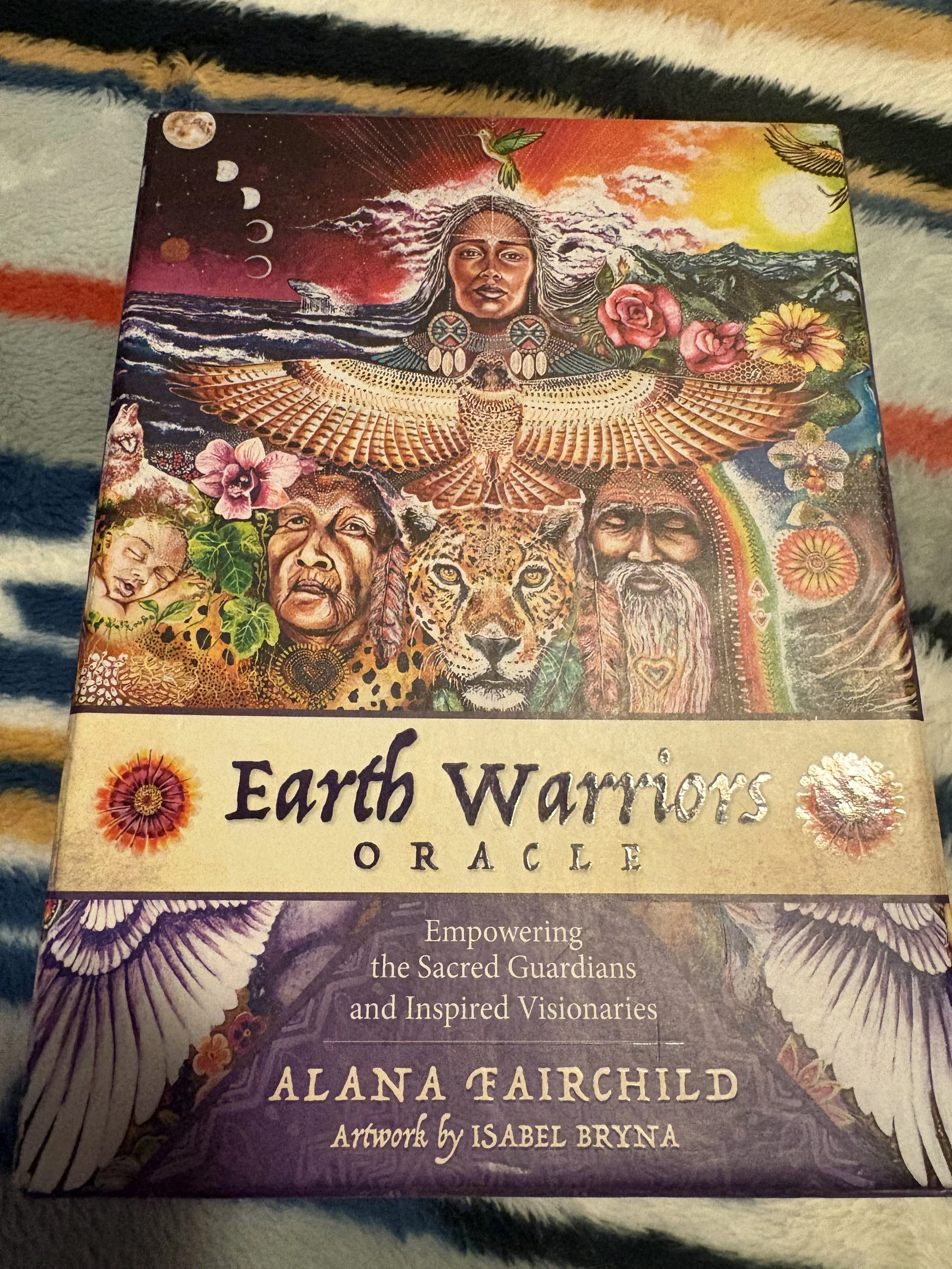
I brought some of her favorite things, including Graters ice cream, playing cards, my journal and a deck of Oracle cards.
I didn't have a particular plan for what I was going to write. I just sat there and began reflecting on our relationship.
I wrote about what it must have been like for her to become my mother, beginning when I was an infant. I reflected on our years together, the different stages of my life, and what it had been like to have her as my mother.
And then I wrote about what it was like not having her anymore.
I shared my fears, my worries, and the things happening in my life that I wished I could talk to her about.
I told her how much I missed being able to pick up the phone and call her. How much I wanted her reassurance and guidance.
When I finished writing, I decided to pull an Oracle card.
For those unfamiliar with Oracle cards, they're cards containing images, symbols, and messages that can be used for personal reflection and contemplation.
I pulled a card and began reading its description.
And I was stunned.
There were specific things in the description that seemed to address the very fears and concerns I had just written about.
Was it coincidence? Was it my subconscious finding meaning in the message? Was it my mother communicating with me?
I can't prove which explanation is correct.
But I can tell you how it felt.
It felt like I had been heard.
About a month later, I had a reading with Asha, a medium I've worked with over the years. During that reading, my mother came through, and Asha shared that I could always come to my mother through writing and that she would answer me.
That absolutely blew my mind.
And now, as I'm sitting here writing this blog, I'm wondering if there was another layer to that message. Could I be purposely writing to her for guidance and connection?
Maybe I should explore automatic writing?
I've read about a practice sometimes called automatic writing, where you enter a relaxed or meditative state and begin writing without consciously directing every thought. Some spiritual practitioners use it as a way of attempting to connect with their spirit guides or loved ones.
I've read a book about the practice, but I haven't actually tried it yet.
Perhaps that's something I'll explore next.
See? Even after all these years, I'm still curious and still learning.
Creating Connection Instead of Waiting for It
One of the things that has become increasingly meaningful to me is intentionally including my loved ones in my life.
During some of my readings with Asha, my mother has reportedly brought up ordinary things I've been doing.
Looking through old photo albums.
Going on a bike ride.
Activities that didn't seem particularly spiritual or extraordinary.
But through those readings, I came to understand that my mother was encouraging me to remember that I could invite her into those everyday experiences.
I didn't have to sit around waiting for a hawk to appear or a particular song to play.
I could simply think of her and include her.
And that is something I would encourage you to consider, too.
What if, rather than focusing so much on receiving a sign, you focused on maintaining the relationship?
Maybe you create a special place in your home with photographs and meaningful belongings.
Maybe you cook your loved one's favorite meal and remember the times you shared around the table.
Maybe you look through old photo albums, listen to music you enjoyed together, or write them a letter.
You might even begin journaling to them regularly, sharing the things you would have shared if they were still physically here.
If you're open to more spiritual practices, perhaps you invite your loved one into your dreams before falling asleep. And if you don't remember your dreams, that's okay, too.
Or maybe you explore Oracle or Tarot cards as a way of reflecting on your questions and feelings.
None of these practices guarantees that you'll receive a supernatural message.
But they can create opportunities to remember, reflect, feel, and reconnect with the love that remains.
And sometimes, that may be exactly what we're needing.
The Empty Seat Beside Me
There's one particular way I continue to include my mother in my life that means a great deal to me.
My mother was one of my daughter Molly's biggest fans.
In fact, I think she may have been one of the first people to encourage Molly to pursue musical theater.
When we would attend children's theater performances, my mother would lean over to Molly and say, "You could totally do that!"
She saw something in her granddaughter and encouraged it.
When my mother died, Molly was only nine years old and just beginning what would eventually become her career in musical theater.
My mother never got to physically witness so many of the performances and accomplishments that followed.
And I know how much she would have loved every single one of them.
So, to this day, whenever I attend one of Molly's performances, if there's an empty seat beside me, I imagine my mother sitting there.
Watching.
Smiling.
Probably bursting with pride.
Sometimes it's an intentional invitation. I think about her and make room for her beside me.
And other times, I genuinely feel her presence.
I also like to imagine that she has an even better view than I do. That she gets to watch every performance, every rehearsal, and every moment of Molly doing something she loves.
How lucky is she?
And here's the thing.
I don't need a particular sign to invite my mother into those moments.
I don't need a hawk to fly overhead or a song to come on the radio.
I simply make room for her.
And in doing so, I feel connected to her.
There's another beautiful layer to this story, too.
My mother's love and encouragement didn't disappear when she died. They became part of Molly's story. Part of the person she was becoming and the dreams she eventually pursued.
In that way, my mother's influence is still very much alive.
Whether you understand that through a spiritual lens or simply through the love and memories we carry, there's something deeply comforting about recognizing that the people we love continue to shape our lives long after they're gone.
What If You Never Receive a Sign?
I want to return to the person who inspired me to write this blog.
The person who has been waiting, hoping, and wondering why their loved one hasn't sent a sign.
I wish I could tell you exactly why some people have these extraordinary experiences and others don't.
I wish I understood all the mysteries surrounding death, consciousness, energy, and what happens when our physical bodies die.
But I don't.
I've spent years exploring these questions, and while my personal experiences have strengthened my spiritual beliefs, I recognize that there is still so much we don't understand.
What I do believe is that the absence of signs doesn't mean there was an absence of love.
It doesn't mean your loved one has forgotten you.
It doesn't mean you're doing something wrong, grieving incorrectly, or somehow less spiritually connected than someone else.
And it certainly doesn't mean you need to work harder to make something happen.
Maybe you will receive a sign someday that feels unmistakable.
Maybe you'll experience something subtle that you might have overlooked before.
Or maybe you won't experience anything that you would identify as a sign.
But I hope that doesn't prevent you from continuing to love and remember the person you've lost.
I hope you'll talk to them if that feels comforting.
Write to them.
Laugh about the memories you shared.
Cry when you miss them.
Bring them along on a bike ride, invite them into the kitchen while you cook, or save them an imaginary seat beside you at the theater.
Because perhaps the most meaningful connection isn't always something we receive from the outside.
Sometimes it's something we intentionally nurture within ourselves.
I've come to believe that our bodies die, but our souls and energy continue. That belief has brought me tremendous comfort throughout my grief journey.
But even if you're still questioning what you believe, you can continue your relationship with someone you love.
You don't have to force anything.
You don't have to search every corner of your world for reassurance.
You can simply make room for them.
And maybe, just maybe, you'll discover that connection was never entirely dependent on receiving a sign.
Because love doesn't stop existing simply because we can no longer see the person we love.